A Modular Operation Theatre (Modular OT) is designed to support modern healthcare facilities with a well-planned, easy-to-maintain surgical environment. Unlike conventional operation theatres, modular OTs are built using smooth wall panels, sealed joints, specialized flooring, and integrated systems that make routine cleaning and maintenance more efficient.
However, maintaining cleanliness isn’t just about having the right infrastructure. Regular cleaning, preventive maintenance, timely inspections, and proper handling of equipment all play an important role in preserving the functionality and appearance of the operation theatre over time.
Whether you’re planning a new hospital, upgrading an existing OT, or simply looking for better maintenance practices, following a few simple guidelines can help keep your Modular Operation Theatre in excellent condition.
Why Cleanliness Matters in a Modular Operation Theatre
A well-designed Modular Operation Theatre is built using materials that are easier to clean and maintain. Features like seamless wall panels, hermetically sealed doors, homogeneous flooring, and integrated HVAC systems are intended to simplify routine maintenance while supporting an organized surgical environment.
While these design features offer long-term advantages, consistent maintenance is equally important. Regular inspections, scheduled servicing, and proper cleaning practices help maintain the quality and performance of the facility.
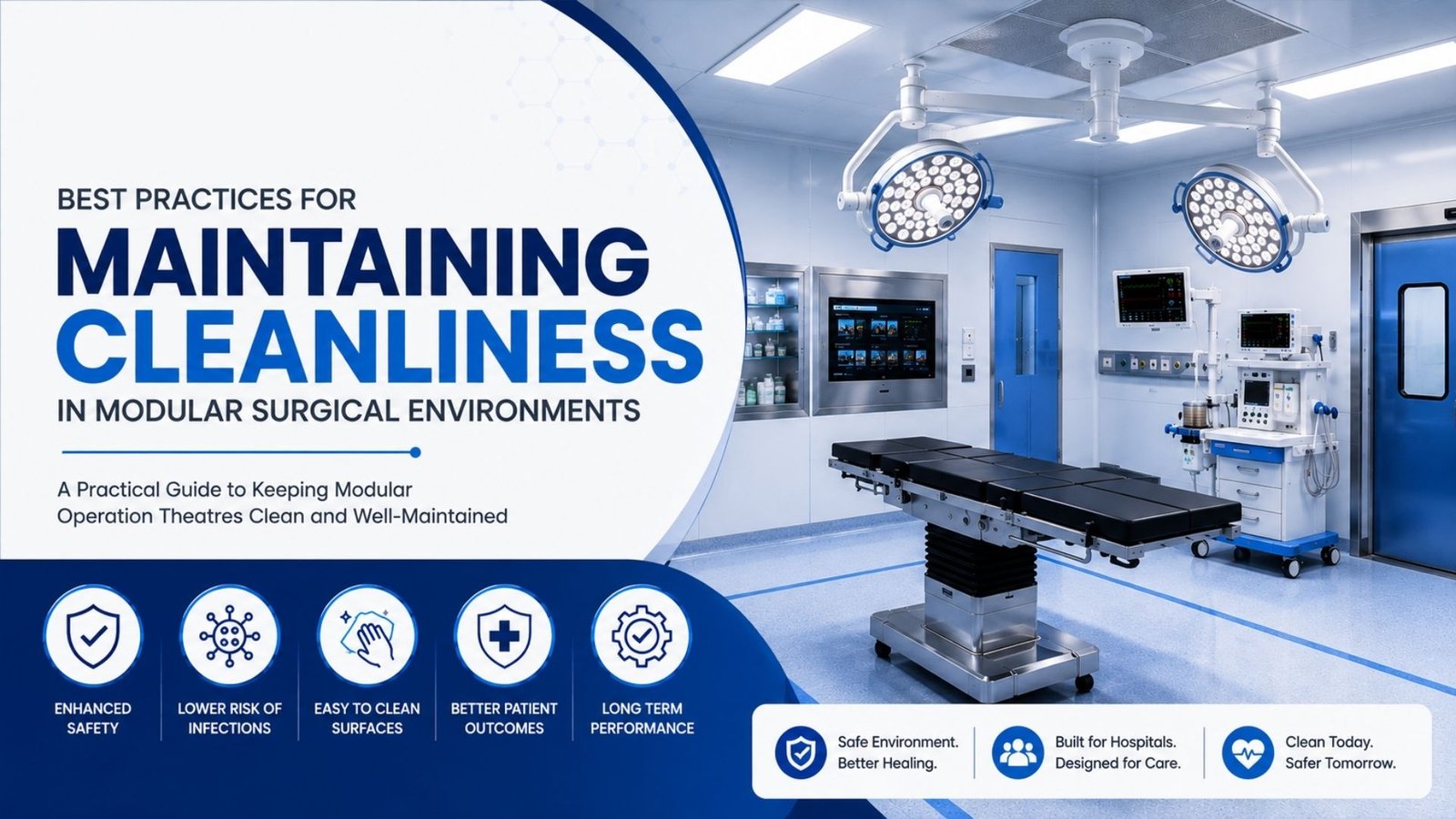
Best Practices for Maintaining Cleanliness in Modular Surgical Environments
- Follow a Routine Cleaning Schedule
Every healthcare facility should establish a regular cleaning schedule based on its internal protocols.
Frequently cleaned areas typically include:
- OT tables
- Wall panels
- Floors
- Doors and handles
- Control panels
- Frequently touched surfaces
Using hospital-approved cleaning products and following consistent cleaning procedures helps maintain the overall condition of the operation theatre.
- Keep Modular Wall Panels Clean and Damage-Free
One of the biggest advantages of a Modular OT is its smooth, non-porous wall panels. These surfaces are easier to clean compared to traditional construction materials.
During routine inspections, check for:
- Surface scratches
- Loose joints
- Damaged seals
- Signs of wear and tear
Addressing small maintenance issues early can help preserve the quality and appearance of the operation theatre.
- Regularly Inspect HVAC and HEPA Filtration Systems
The HVAC system is an essential part of every Modular Operation Theatre. Components such as HEPA filters, Laminar Air Flow (LAF) systems, and Air Handling Units (AHUs) should be inspected according to the manufacturer’s recommendations and the hospital’s maintenance schedule.
Routine servicing may include:
- Checking filter condition
- Inspecting airflow performance
- Monitoring air pressure
- Cleaning air handling components
Planned maintenance helps keep these systems functioning efficiently.
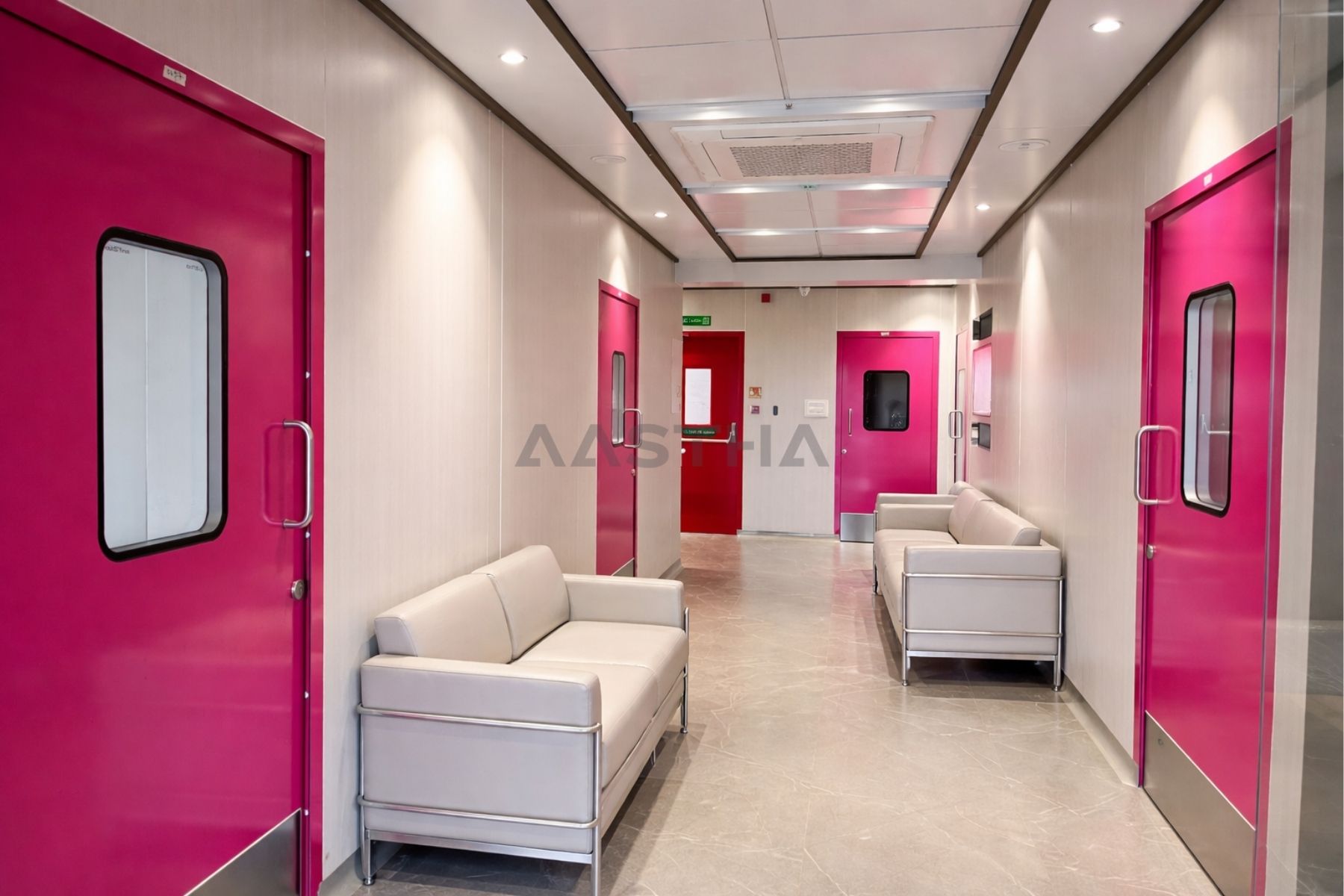
- Maintain Hermetically Sealed Doors
Hermetically sealed doors are designed to complement modern Modular Operation Theatre environments.
Routine inspections should include:
- Door alignment
- Rubber gasket condition
- Automatic door operation
- Locking mechanisms
- Surface cleaning
Keeping doors in good working condition supports smooth day-to-day operations and helps maintain the overall quality of the OT.
- Organize Equipment Properly
Keeping medical equipment well organized not only improves workflow but also makes routine cleaning easier.
Avoid unnecessary clutter inside the operation theatre and ensure adequate space around equipment for cleaning and maintenance activities.
Proper storage also helps reduce unnecessary wear on modular walls and flooring.
- Schedule Preventive Maintenance
Rather than waiting for equipment or infrastructure to require repairs, preventive maintenance helps identify small issues before they become larger problems.
Regular inspections can include:
- Electrical systems
- Modular wall panels
- Ceiling systems
- Lighting
- Medical Gas Pipeline Systems (MGPS)
- HVAC equipment
- Hospital doors
Maintaining a preventive maintenance schedule contributes to the long-term performance of the facility.
- Train Staff on Standard Maintenance Procedures
Even the most advanced Modular OT depends on trained personnel to maintain it properly.
Periodic staff training can include:
- Cleaning procedures
- Equipment handling
- Maintenance reporting
- Waste management
- Daily inspection checklists
Well-informed staff help ensure consistency in daily operations.
- Maintain Proper Documentation
Keeping records of maintenance activities makes facility management much easier.
Hospitals often maintain records for:
- Cleaning schedules
- Equipment servicing
- Filter replacement
- Preventive maintenance
- Facility inspections
Documentation also helps track maintenance history and future servicing requirements.
Why Choose Aastha Medical Technologies?
Aastha Medical Technologies is a trusted Modular OT Manufacturer specializing in complete hospital infrastructure solutions across India.
With years of experience and in-house manufacturing capabilities, we design and execute customized solutions for healthcare facilities, including:
- Modular Operation Theatres
- Intensive Care Units (ICU)
- Neonatal Intensive Care Units (NICU)
- Pediatric Intensive Care Units (PICU)
- IVF Labs
- Hermetically Sealed Sliding & Swing Doors
- Modular Wall & Ceiling Panels
- Medical Gas Pipeline Systems (MGPS)
- HVAC Systems
- Laminar Air Flow Systems
- Air Filtration Solutions
From design and engineering to manufacturing, installation, and project execution, our team focuses on delivering reliable, high-quality healthcare infrastructure tailored to the unique requirements of hospitals and healthcare institutions.
Conclusion
Maintaining cleanliness in a Modular Operation Theatre is an ongoing process that combines well-designed infrastructure with regular maintenance and responsible facility management. Routine cleaning, scheduled inspections, preventive maintenance, and proper staff training all contribute to keeping the operation theatre organized and functioning efficiently.
As healthcare infrastructure continues to evolve, investing in quality modular systems and following consistent maintenance practices can help healthcare facilities maximize the long-term performance of their operation theatres.